 Watch IMC 2026 Recordings
 Browse Talks & Slides
About IMC 2026
The Intelligent Maintenance Conference (IMC) is an international event dedicated to advanced diagnostic methods, intelligent monitoring, and data-driven maintenance of industrial systems. The conference brings together experts from academia and industry to exchange ideas, share practical experience, and discuss emerging challenges in predictive maintenance and asset management.
IMC 2026 will continue this tradition by featuring contributions from leading researchers and practitioners across sectors including railway infrastructure, energy systems, manufacturing, transportation, and process industries. The program will highlight recent advances in artificial intelligence, machine learning, and digital technologies for maintenance and reliability engineering.
Building on the success of previous editions, IMC 2026 aims to foster in-depth technical discussions and strengthen collaboration between academic research and industrial practice.
Further details on the program, workshops, and speakers will be announced soon.
Confirmed Speakers
Deep Mining the Universe - How Machine Learning Is Helping Astronomers Make New Discoveries

Machine learning is quickly becoming an important tool in astronomy. With huge amounts of data and countless things left to discover, it gives us new ways to find patterns and surprises we might otherwise miss. It's already helping scientists discover unusual objects in the universe and explore big mysteries like dark matter in new ways. In this talk, I'll show how combining machine learning with data from modern space telescopes is opening up exciting new possibilities—and why we're likely just getting started.
AI in Railway - A step closer to Intelligence Maintenance

Artificial intelligence and data science are changing the maintenance of railway
infrastructure. Instead of manual track inspections and isolated data sources, AI
powered methods are supporting step by step automatic deviation and failure detection,
assessment of condition data, and consistent quality assurance across the entire value
chain. Modern analytical techniques turn large volumes of data from sensors, diagnostic
vehicles, and digital models into actionable information.
The open data format RCM DX also creates a shared digital foundation that makes data
consistently usable for the first time—regardless of systems, applications, or vendors.
Complementary AI technologies such as digital structure gauge analysis, object
detection, and sensor fusion open new perspectives on the condition of the tracks and
support a holistic understanding of railway infrastructure.
This brings us closer to the shift from reactive to predictive maintenance: deviations
are detected earlier, resources are used more purposefully – safety and efficiency are
increased. AI and data science are thus key enablers for an efficient, scalable, and
future oriented railway maintenance.
Why Does Maintenance Need to Be Intelligent? Historical Perspective and Future Outlook.

Maintenance has transformed from a "necessary evil" to a critical industry priority,
driven by economic awareness and technological advances. In our view,this evolution
spans three distinct periods: before 2000; from 2000 to 2017, and from 2017 to now.
Historical Perspective
Before 2000: foundation years. After “ corrective-only” maintenance and
then scheduled maintenance based on “equipment potential”, Reliability-Centred
maintenance has emerged, as a rational way of selecting maintenance strategy on the
basis of functional analysis and requirements specifications. In parallel, a number of
condition-monitoring techniques have enabled the “ condition-based maintenance”
concept.
From 2000 to 2017: the PHM Revolution. “Prognostics & Health
Management” and predictive maintenance emerged first in the aerospace industry, then in
some other sectors .This period is also when giant steps took place in machine learning
and its epoch-making applications to image processing (Image Net) and natural language
processing . In parallel, a number of physics-based degradation models started to be
applied. The first PHM standard ( IEEE-std -1856) was published in 2017.
From 2017 to now: towards more intelligence .A 2020 paper in
Engineering Applications of AI (“Potential, Challenges and Future Directions for Deep
Learning in PHM Applications”, O.Fink et al.) described the successes of deep learning
in the worlds of images and words, and highlighted the perspectives and challenges that
exist in the world of “things” , such as maintenance .Quite a few of those challenges
have now been successfully addressed already, at least in part. Enthusiasm for “big
data” and purely data-driven concepts started to give way to hybrid approaches :
physics-informed machine learning, and also reliability-informed deep learning. With
Chat-GPT ( November 2022) and its competitors, the concept of Large Language Models
(LLM) has entered our lives - and in particular the maintenance field. Key strides have
been made in addressing explainability, causal inference, trustworthy AI for PHM,
uncertainty quantification, and have been presented in successive editions of this
Intelligent Maintenance Conference. Last but not least, the vision of the role of humans
in the maintenance process has evolved ,as evidenced by the transition from Industry 4.0
to Industry 5.0, and now 6.0. Cooperation between humans and intelligent machines seems
to be the trend.
Industry adoption of PHM has progressed at very unequal speeds in different fields, and,
in many cases, much remains to be done before it becomes 'mainstream'.
Future Outlook
Key remaining challenges include PHM for safety-critical systems, designing PHM for
complex systems and systems of systems, merging PHM and RAMS, dealing with autonomous
systems, and health-aware control. Undoubtedly, those challenges will drive future IMC
discussions and industry innovations.
From Physics and Statistics to AI: Prognostics Methods for Electrical Substations

Electrical distribution systems are an important critical infrastructure. Avoiding failure of assets and guaranteeing the functionality of its safety devices is therefore an important objective. Operators and service technicians would like to rely on diagnostic and prognostic solutions to plan for service and maintenance to keep the system running. The high reliability of the assets and the avoidance of any failure of them makes real failure data very scarce. Purely data-driven approaches have therefore often not been successful. A way forward is the use of additional sources of information, combining physics, statistics, and AI/ML. In this presentation several different assets and failure modes are used as examples to show how this is applied to some of their important failure modes. Simulation-based inference is used to incorporate domain knowledge in the form of simulators. “Approximate Bayesian Computation” and “Neural Posterior Estimator” allowed to extract model parameters including uncertainties from complex measurements. Issues with nonidentifiabilities are shown to be avoided. Tracking the degradation of such features is a key approach for prognostics and the determination of the RUL distribution. Specific types of particle filters can determine the process parameters exactly and allow for robust predictions. As an alternative, focusing on the transition from a healthy to a faulty state of the system, online changepoint detection is explored including its future evolution. Prognostics directly using the data without feature extraction is possible based on Koopman operator theory. Finally, some aspects of how reliability and prognostics are potentially converging and and outlook, how this can be done is given.
Continuum Robots for Inspection and Repair in Industrial Environments

Industrial systems across land, air, and sea rely on safety-critical assemblies, such as engines, fuel tanks, and pipelines, that require periodic inspection to detect issues before they necessitate costly, unscheduled repairs or service removals. However, performing in-situ maintenance is exceptionally challenging because these components are often crammed into confined, high-complexity environments with limited access. A continuum robot is an ultra-flexible robotic structure that uses internal actuation (like cables or concentric tubes) to achieve continuous, snake-like bending, allowing it to navigate complex, cramped spaces that traditional rigid-joint robots cannot reach. Recently, several academic breakthroughs have successfully transitioned into commercial products. This presentation explores the latest advancements in snake/continuum robotics for an entirely new application: the "healthcare" of industrial systems. I will provide a brief overview of the evolution of continuum robots, followed by the specific research challenges and solutions involved in deploying these systems across the aerospace and nuclear sectors.
Beyond the Pilot: Architecting Continental-Scale Predictive Maintenance

As a cornerstone of the Plants of Tomorrow initiative, Holcim is transitioning from
localized AI pilots to a continental-scale predictive maintenance ecosystem. While a
Proof-of-Concept (PoC) proves an algorithm, scaling to 1,000+ critical assets—including
high-torque gearboxes, vertical roller mills (VRMs), and kilns—requires solving the
"Industrial AI Paradox": maintaining high precision while managing massive environmental
and operational variance across 100+ global sites. This technical presentation breaks
down the architecture and deployment of C3 AI Reliability on a global scale. We move
beyond theoretical data science to explore the systems engineering required to achieve
operational resilience:
Hybrid Edge-to-Cloud Topology: A deep dive into deploying AI on
resource-constrained, semi-air-gapped edge devices. We discuss the optimization of
Kubernetes clusters at the plant level to ensure real-time inferencing and high
availability, even during network latency or outages.
Heterogeneous Asset Modeling: Strategies for managing "Model Drift"
across diverse
manufacturing environments. We analyze how we leverage "Golden Models" while
incorporating unit-specific baselines to account for varying loads, speeds, and
ambient clinker temperatures.
Automated Feature Engineering & Signal Processing: How the pipeline
automates the
transformation of raw high-frequency vibration and thermal telemetry into actionable
"Probability of Failure" (PoF) metrics across thousands of concurrent streams.
Closing the Loop with Ground Truth: The technical integration between
AI alerts and
the Technical Information System (TIS), ensuring that maintenance feedback from the
floor directly refines the supervised learning sets for improved precision.
Attendees will leave with a technical blueprint of how Holcim is moving toward a
self-healing plant, shifting maintenance from a reactive cost center to a competitive,
data-driven weapon in the global building solutions market.
Taming Complexity: Advanced Analytics for a Diverse Turbomachinery Fleet

As reducing maintenance costs and enhancing operational efficiency become increasingly critical, remote monitoring with automated analytics has emerged as a key strategy for managing turbomachinery installations. While the use of complex physics-based algorithms like thermodynamic models can be beneficial for fleets with machines of similar types and instrumentation, this becomes increasingly difficult for fleets comprising multiple machine types, such as compressors and turbines, operating under diverse conditions, configurations, ages, and service histories. To address this, an end-to-end data processing chain is presented that transforms raw sensor signals into actionable diagnostic insights. This spans from sensor measurements through analytics to decision support. As specialized approaches only have a limited impact on the overall fleet, the first step is to reliably detect anomalies relative to expected behavior. For that, a combination of semi-supervised, ML-based anomaly detection and physicsinformed regression algorithms is employed. The regression algorithms predict important KPIs like efficiency, depending on the operating condition and comparing them to target values. The output of these algorithms is then fed into a fuzzy logic framework that is based on formalized knowledge mostly collected via expert workshops. This enables the integration of insights from root-cause analyses into an automated data flow, creating actionable advice for detected anomalies. The presentation also emphasizes how well-suited different analytics solutions are for diverse machine fleets and how large language models can be leveraged to accelerate the knowledge-collection process by giving suggestions based on documentation and service reports.
Agentic Root Cause Analysis
Root cause analysis (RCA) in industrial systems aims to identify the underlying physical or operational cause of abnormal behavior. In complex systems with inter-variable dependencies and a control policy, RCA is often slow, costly, and heavily dependent on expert knowledge, particularly under varying or unseen operating conditions. In practice, traditional RCA relies on alarm logs, historical reports, and physical system inspection, which limits scalability and generalization to new operating conditions or unseen faults. To address those issues, we propose an agentic framework that combines system-specific diagnostic tools with large language models (LLMs) for interpretable root cause analysis. Our framework decomposes RCA into two components: (i) relationship-based anomaly surrogates trained on normal process data to model global variable dependencies and detect deviations, and (ii) an LLM-based reasoning agent that iteratively queries these tools to gather evidence, construct causal explanations, and rank fault hypotheses. We evaluate the approach on both synthetic and real-world industrial process datasets using steady-state process measurements. This work outlines a scalable and interpretable pathway toward hybrid AI systems for industrial diagnosis.
Physics-Informed Multi-Modal 3D Reconstruction for Building Models and Energy Analysis
Accurate digital building models are essential for building energy analysis, retrofitting, and sustainable urban development. However, most existing buildings still lack detailed and simulation-ready documentation. This talk presents a research framework on physics-informed multi-modal 3D reconstruction for building models and energy analysis, aiming to automatically generate energy-oriented digital building representations from visual observations. The work combines advanced neural scene representations with semantic and thermal modalities to recover both geometric and physical properties of building envelopes. First, semantic-aware 3D reconstruction enables the estimation of key geometric characteristics, such as window-to-wall ratio and building footprint, beyond the limitations of conventional 2D image-based methods. Second, RGB-thermal observations are incorporated to jointly reconstruct geometry and temperature fields, while a physics-informed heat transfer model enforces consistency with governing thermal processes. This allows the inference of material properties and boundary conditions directly from observations, supporting more reliable thermal characterization. Overall, the proposed approach bridges state-of-the-art neural reconstruction and practical building energy modeling by moving from image-based scene understanding to explicit, simulation-ready 3D building models. The framework has the potential to reduce manual effort, improve scalability, and enable more accessible and accurate energy performance assessment for existing buildings.
Designing and Exploiting Compliant Robots to Access Extreme Environments
This talk will explore a number of approaches to designing and fabricating robots that can robustly interact with the environment through embodied intelligence. This involves developing and exploiting materials, structure and sensory-motor control, to provide robots with advantageous capabilities. These approaches stem from bio-inspiration and biomimicry but also exploring computational approaches to design. The applications and new capabilities enabled by these robots will be discussed, with a focus on sustainability and agricultural applications and how they could be applied for data-capture and monitoring to inform the control or monitoring of complex systems.
Optimizing Maintenance for a 91km Subatomic Factory

CERN’s proposal for the Future Circular Electron-Positron Collider (FCC-ee) represents a leap in scale, more than tripling the circumference of the Large Hadron Collider (LHC)—currently one of the largest scientific instruments ever built. While the 15-year scientific mission and financial envelope of FCC-ee are being defined, availability simulations indicate that replicating LHC's design, operation, and maintenance paradigms leads to significant performance shortfalls. Meeting physics targets necessitates maximizing uptime while minimizing increases in cost or headcount. To this end, potential gains from optimized maintenance are evaluated across a diverse asset ecosystem, ranging from commercial off-the-shelf (COTS) components to unique, highly specialized systems. An availability simulation framework evaluates the impact of increasing uptime through both advanced maintenance options —including robotics and condition-monitoring—and architectural strategies such as modularization and redundancy. By analyzing current prescriptive maintenance benchmarks and forecasting technological trajectories, this presentation proposes a roadmap for the maintenance strategies underpinning the scientific mission of the FCC-ee.
Contact-Free Microwave NDT for Non-Conductive Composites

Microwave wideband radar imaging is an emerging non-destructive testing technique with significant potential for condition monitoring and inline production monitoring of dielectric materials and composite structures. The method enables fast, non-contact inspection and can provide high depth resolution for detecting internal defects and structural variations. A central challenge is that image reconstruction is typically an ill-conditioned inverse problem. By applying artificial intelligence to the reverse problem, the interpretation of microwave responses can be improved, leading to more stable imaging, better defect identification, and enhanced material characterization. This makes the technique highly promising for industrial quality assurance, predictive maintenance, and automated monitoring systems.
Digitalization of metrology: How computational fluid dynamics and machine learning can contribute to the improvement of flow measurement

In the course of digitalization, virtual experiments and digital twins are being applied in various industrial sectors, including aerospace, manufacturing, healthcare, energy and automotive. They are now also in everyday use in many areas of metrology, for example to explore the accuracy of measurement devices, to specify required machine tolerances and part characteristics, or to identify significant sources of uncertainty. For them to be suitable as replacements or extensions to certified measuring instruments, however, uncertainty evaluation methods that comply with the Guide to the Expression of Uncertainty in Measurement (GUM) are required. Additionally, reliable validation procedures must be employed that consider all sources of error and uncertainty. Both issues will be discussed in this presentation. Furthermore, the potential and limitations of virtual metrology will be illustrated using flow measurement as an example. The presentation will demonstrate how computational fluid dynamics can be used to predict the error of flow meters in disturbed flow conditions, and how machine learning can improve flow measurement, e.g. in district heating systems.
Monitoring Hydropower Turbine Efficiency at Scale Using Operational Data

Turbine efficiency is a key performance indicator in hydropower operations. Across Axpo’s hydropower fleet, a theoretical 1% loss in efficiency corresponds to roughly CHF 5 million in annual revenue at a baseload price of CHF 60/MWh. Reliable efficiency monitoring is therefore essential for efficient operation and optimized maintenance. In this talk, we present how Axpo Digital Solutions leverages large scale operational data to monitor turbine efficiency across a heterogeneous hydropower fleet. Using a few select signals among more than 300,000 operational signals, we estimate relative turbine efficiency with a K-Nearest Neighbors (KNN) regression approach. We discuss model transfer to new plants, explainability for different stakeholders, and how trust in data driven efficiency estimates is established for operational use.
Enhancing through-life servicing of complex power system products through collaborative Research and Development

The increasing complexity and criticality of power system products, such as aeroengines, demand novel approaches to asset management, inspection, and repair. This presentation explores the development of advanced in-situ technologies for asset inspection and repair, focusing on examples which highlight the critical role of robotics and mechatronic systems. By enabling improved inspection and repair operations, these technologies aim to significantly reduce downtime, extend asset life, and optimize maintenance costs—delivering substantial business value for operators and Rolls-Royce alike. Central to this progress is a collaborative research and development approach, leveraging partnerships with leading universities and research institutes, such as the University of Nottingham. Through joint projects, knowledge exchange, and a close collaboration, we accelerate the translation of academic breakthroughs into industrial solutions. This approach not only fosters innovation but also ensures that emerging technologies are robust, scalable, and aligned with industry needs. The presentation will highlight case studies and demonstrators developed through these collaborations, showcasing how robotics, mechatronic systems and digital inspection tools are reshaping the servicing landscape for complex power systems. Through these case studies, attendees will gain an insight into how industry and academia can collaborate to underpin successful technology adoption across multiple industrial fields, such as aerospace, and beyond.
An industry perspective on Battery Energy Storage Systems (BESS) lifetime value: impact of BESS profitability on aging

As Battery Energy Storage Systems (BESS) are set to become a key component of modern power systems, the relationship between hardware performance, operational strategy, and economic performance is now a primary concern of many players along the BESS supply chain. This talk explores the impact of BESS profitability on aging, and viceversa. We investigate how battery cycling and different resting strategies impact BESS profitability and battery degradation when participating into multiple European markets, including wholesale electricity markets as well as provision of grid services. We use such analysis to derive conclusions about the design of flexible BESS warranties that could maximize battery profitability while ensuring top-tier hardware performance.
Asset Integrity at Scale: Optical Distributed Sensing meets Machine Learning

Power, telecom and pipeline assets routinely span tens to hundreds of kilometres of buried or submarine routes, and almost every one of them carries an optical fibre. Distributed Fibre Optic Sensing turns that fibre into a continuous sensor for the entire route. Slightly different physical effects can be exploited to measure quantities such as temperature and strain, enabling the development of DTS, DSS, and DAS classes of distributed sensing instruments. This talk focuses on DAS, where the potential use-case variability, data volume and modelling challenge are most pronounced. A single system produces data on the order of terabytes per day, and the maintenance question often shifts from whether we can sense to what and how we can extract. We present how Prysmian's EOSS Data Analysis team operates layered signal processing and machine learning pipelines to convert raw strain signals into valuable insights, enabling actionable decisions.We will discuss the modelling realities behind these applications: extreme class imbalance, the annotation bottleneck, generalization across sites, and the precision versus recall trade off as an operator level business decision. We close with a look at the techniques we explore to push past these limits, illustrated with concrete examples from current projects.
Conference Program
Day 1
Day 2
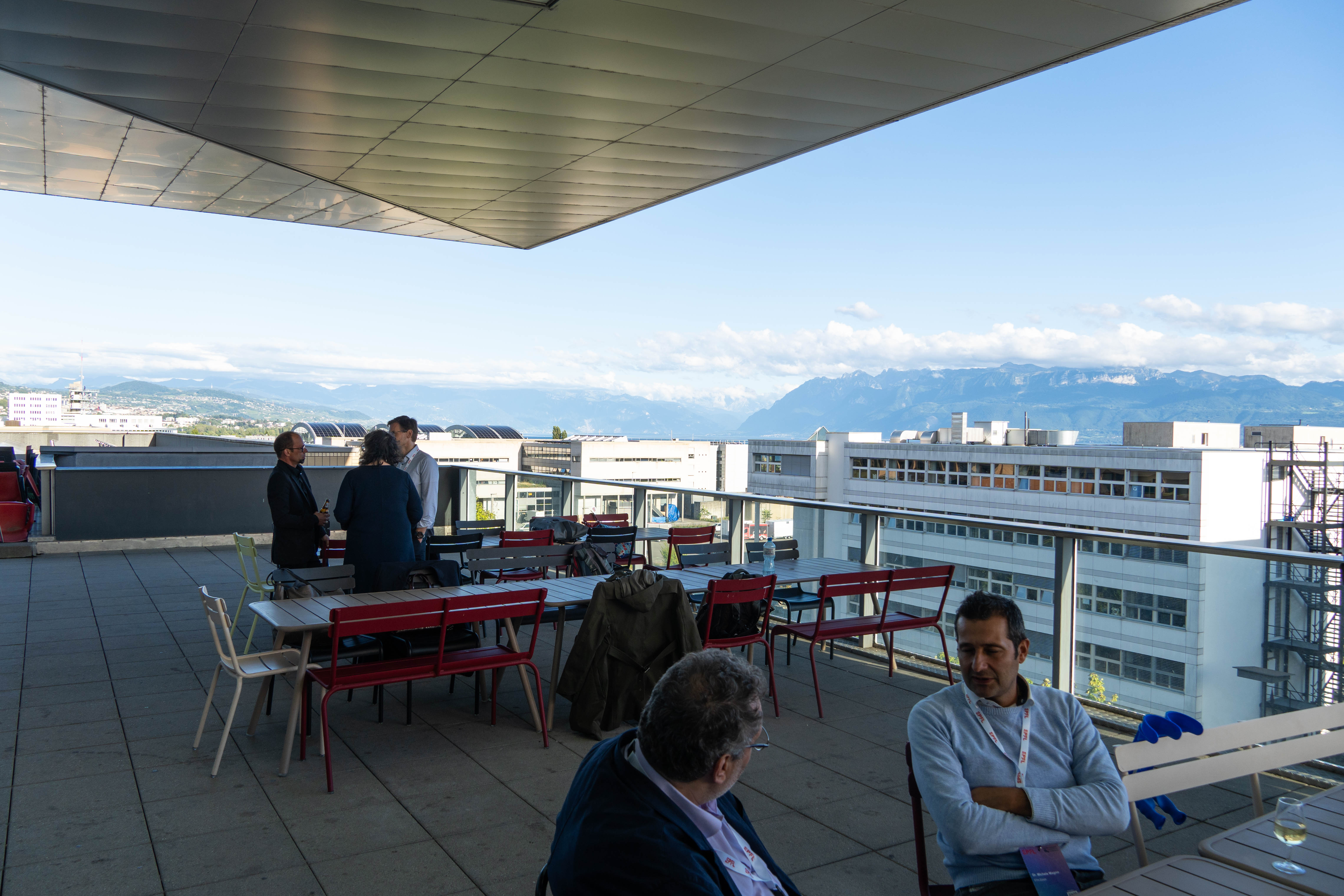
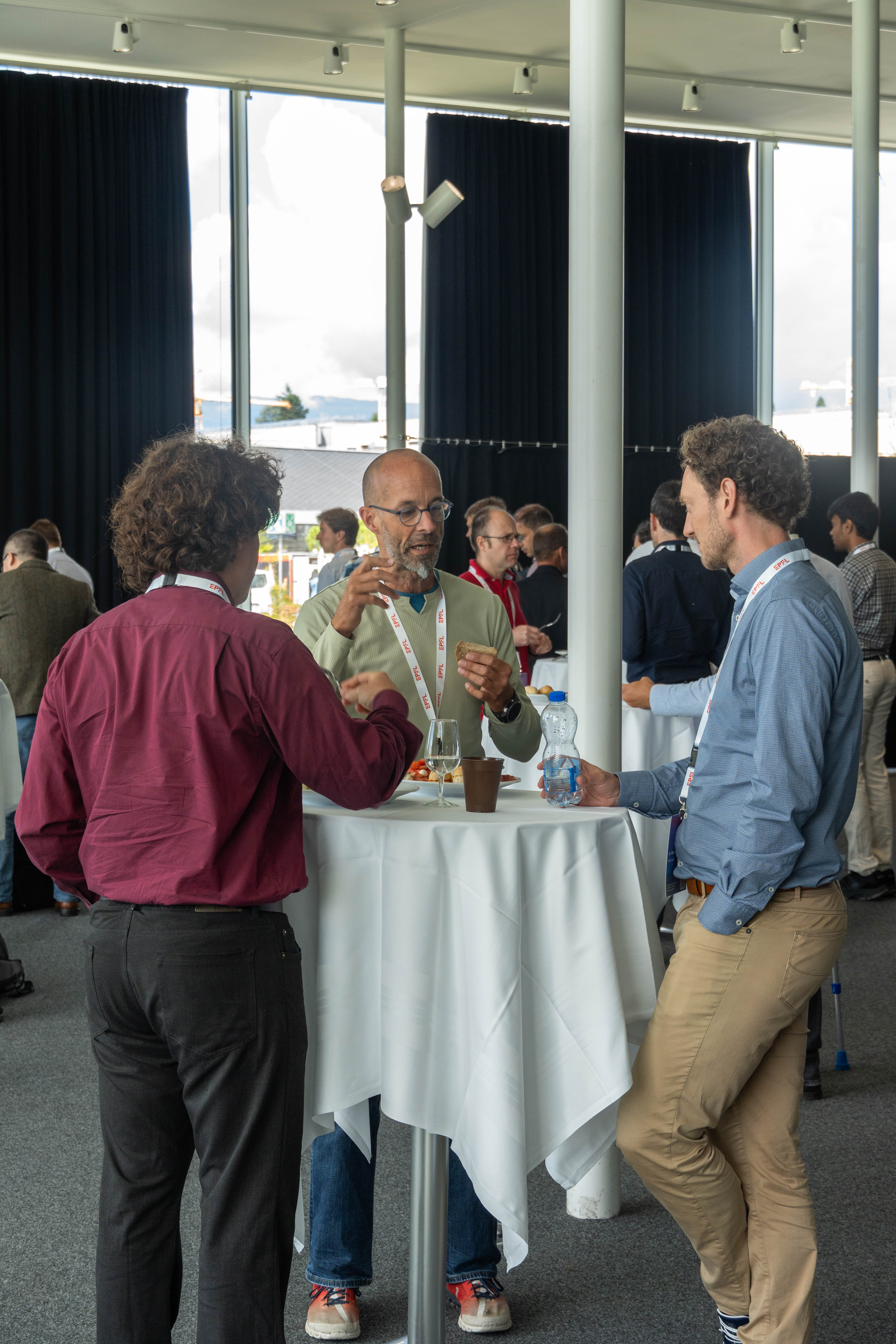
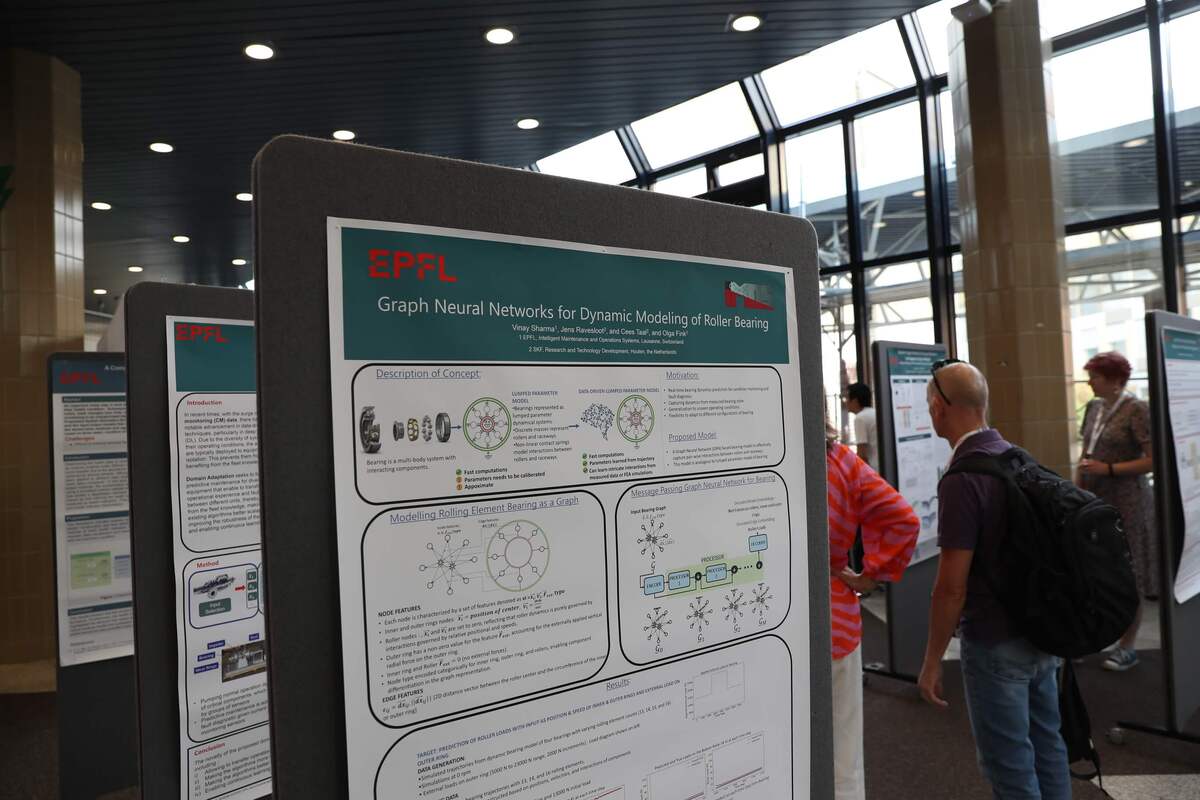
Previous Conferences Experience


IMC Hands-on Workshop
August 31, 2026
The pre-conference workshop will provide a hands-on introduction to reproducible PHM benchmarking, graph-based modeling of industrial systems, and graph representations for time series processing.
Time Series Modeling for Industrial PHM with PICID: A Modular Evaluation Infrastructure for Reproducible PHM Across Tasks and Domains

PHM data unfolds across a heterogeneous landscape in which assets, sensors, operating regimes, failure modes, and task definitions rarely align into a single experimental template. As a result, new data-driven models have often been developed in their own environments and training loops, making fair benchmarking difficult and the implementation of strong baselines complicated. PICID addresses this fragmentation by turning datasources, PHM tasks, transformation pipelines, models, evaluators, and metrics into modular components that can be exchanged and compared under the same scientific setup.
This session introduces PICID as a practical framework for rigorous industrial PHM studies. We show how its Python interface and configuration-driven workflow help engineers move from raw maintenance data to reproducible benchmarks: define the task, plug in industrial datasets, compose transformation pipelines, and preserve the resolved configuration and run artifacts needed to repeat and audit the results.
Exploiting Structural Dependencies in Industrial Systems with Graphs
Industrial assets are rarely collections of independent measurements. Components, sensors, operating modes, and subsystems are linked by physical, functional, and operational dependencies, and those relationships often determine how faults propagate and how condition information should be interpreted.
This topic introduces how these relationships can be defined as a graph, with industrial entities represented as nodes and their dependencies as edges, and explains how Graph Neural Networks can learn from this structure. The talk focuses on the intuition behind graphs for industrial PHM, why relational structure can improve modeling of complex assets, and how this perspective supports generalization to changing or unseen environments.
Graph Representations for Time Series Processing

Graph deep learning methods have become popular tools to process collections of correlated time series. Unlike traditional multivariate methods, graph-based models leverage pairwise relationships by conditioning predictions on the structure of the system being modeled. This tutorial will explore these methods in depth, providing practical examples and insights. In the first part, we will introduce concepts and methods, together with an overview of existing architectures. In the second part, we will focus addressing practical challenges that often emerge in real-world applications, such us missing data and scalability requirements
Registration is closed
Registration for IMC 2026 is now closed.
Thank you for your interest in the Intelligent Maintenance Conference.
Venue & Transportation
Day 1–2, 2026
Auditorium BCH2 201 / BCH2 219
EPFL, CH-1015 Lausanne
How to Get Here
Sponsors

Gold Sponsor
Our Team

Prof. Olga Fink

Thy Maire

Dr. Ismail Nejjar
Raffael Theiler

Vinay Sharma

Sergei Garmaev

Han Sun

Keivan Faghih Niresi

Zepeng Zhang

Leandro Von Krannichfeldt

Chenghao Xu

Amaury Wei

Kevin Steiner
Andrea Cini
Contact Us
Have questions about the conference? Get in touch with our team!
Address
EPFL, Station 18
CH-1015 Lausanne
Switzerland